
 1 month ago
12
1 month ago
12
NASCAR Cup Series drivers are used to navigating new tracks.
Three years ago, it was a temporary street course in Chicago. Last year, it was the road course at Autodromo Hermanos Rodriguez (although some drivers had experience with a previous version of the Mexico City circuit).
So this year on a temporary street (and tarmac) course on Naval Base Coronado, it should be something they are comfortable with, right?
The answer is no, despite drivers having had opportunities to drive their manufacturer’s simulators that depicted the course the best they could. But even NASCAR could change the placement of some barrels in turns to change the apex if they feel they need to make an adjustment.
"It doesn't make you more comfortable," three-time Cup champion Joey Logano told me and other reporters last week. "It's just we're more used to it a little bit. ... We think our [simulators] are close, but no one has even seen the track in real life to see exactly where the walls are going to be placed and the tire bundles and all this stuff.
"We're not going to know until we get there."
While NASCAR drivers have experience with a street circuit and tight conditions, they have never had one as long as what awaits them this weekend — a 16-turn, 3.4-mile course that weaves its way through the streets of the military base, the main island road by the San Diego Bay and then onto the tarmac that is typically filled with military helicopters.
They will pass by the aircraft carrier USS Carl Vinson in Turns 3 and 4 on what is a relatively flat course in what will be NASCAR’s event that celebrates the 250th birthday of the United States.
"I feel like it’s the most challenging place I've ever had to just challenge myself on the [simulator] to just really just dive into data and change how I'm driving completely," Chase Briscoe said in a news conference last year. "[I’m] even sometimes using two or three different driving techniques for two or three different corners in a row.
"It’s a really, really challenging racetrack. If a guy's not put in the time, they're going to get exposed."
Drivers expect to be chasing New Zealander Shane van Gisbergen, who won the inaugural Chicago street race, a victory that propelled him to full-time Cup status starting in 2025. He has won six of the last seven road and street course events.
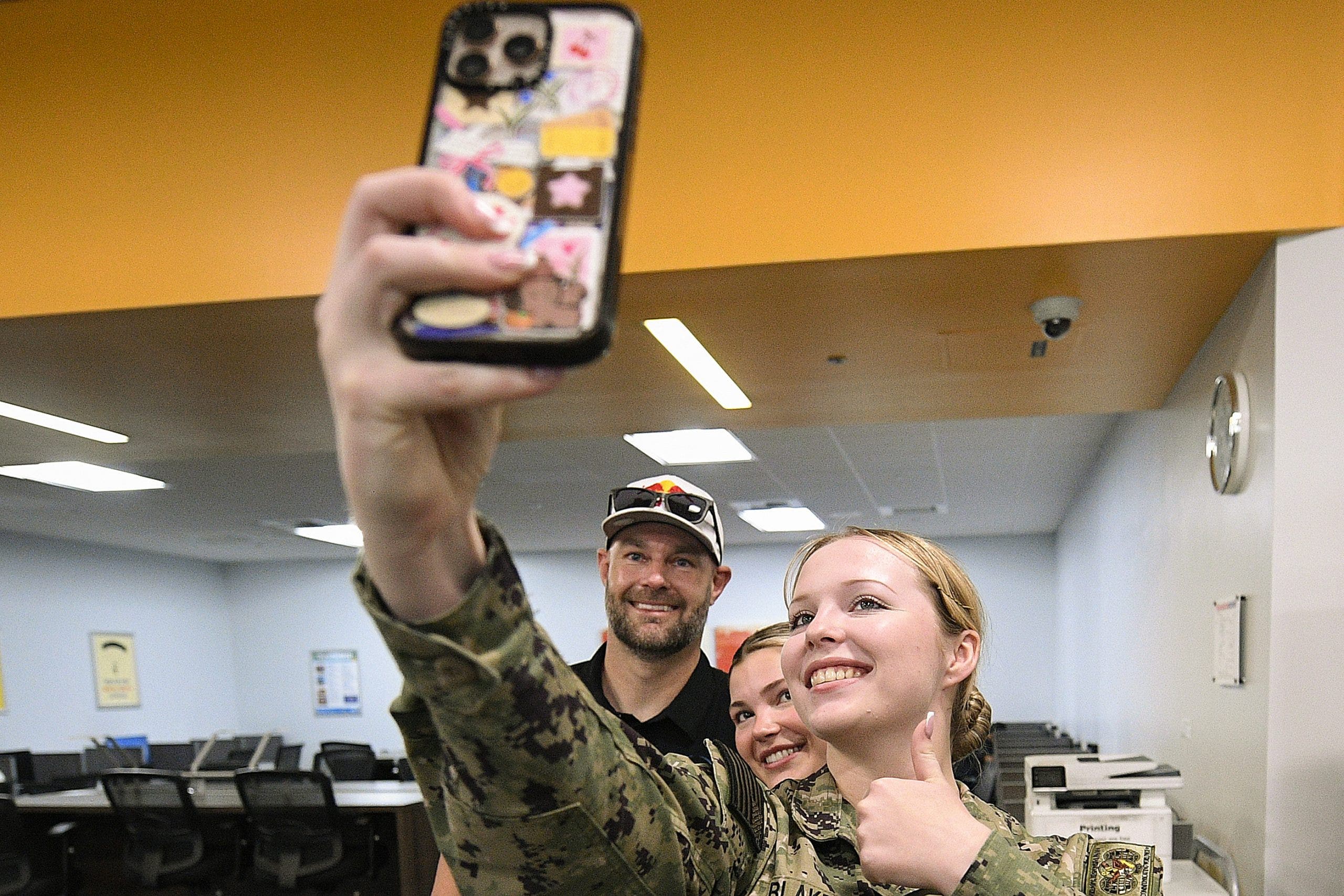
Will Shane van Gisbergen pick up another road course win at the inaugural San Diego race? (Photo by Orlando Ramirez/Getty Images)
"It's going to be very bumpy, so it's all about the car then," van Gisbergen said in a team news release. "You've got to have good suspension set up, soft and compliant. ... The straightaways [transition] into little tricky sections and corners, nothing really flows, it's all one to the other.
"Then we will put a corner here and here. It's odd, but that makes it a really good challenge. Getting in a rhythm will be really tough but will be important."
Cup teams will get 50 minutes of practice Friday and then qualify Saturday for the 75-lap race Sunday. NASCAR has used drivers to help develop the course and give ideas — SVG was one who suggested a chicane to scrub some speed before coming to pit road.
Other drivers focused on the nuance of a street course. Austin Cindric wears glasses and wanted to make sure that the signs that show how many feet before the turn are clearly visible. At Chicago in the first year, officials at first made them street-sign style, but they ended up being a little hard to read.
"The impact that I was able to make was good to get brake markers that were large enough to read for us visually impaired people," Cindric told me and other reporters. "I got to see the brake markers — there’s a large number on there so I’m happy about that."
NASCAR has had to weld 150 manhole covers, electrical boxes, compressed air boxes, etc., throughout the course. It also has had to try to smooth an area of the track that goes over rails for cranes that are used to repair ships. There also is bump just past Turn 5 that is designed for street drainage — drivers will have to likely choose to go inside or outside of the dip in that area.
Drivers have been out to the base to take a look at the track build and also have been out to the base to film promotional content. Ryan Blaney was one of the drivers who was there for a few days in for a 30-minute fictional film featuring drivers and the Navy.
"Everyone's starting at zero there," the 2023 Cup champion Blaney told me and other reporters. "So I look forward to getting out there at San Diego. I think it's going to be a fantastic weekend. The course is very unique, but I think it's going to put on a good show.
"And to be able to do it at Coronado, especially this year, it’s going to mean a lot to a lot of people."
At least with the Chicago experience the last three years, drivers know how to scout the course a little better and what the keys to success will be on Sunday.
"Just like any street course — don't hit the barriers," Michael McDowell told me and other reporters last week. "It’s so hard visually, and as you're wrapping around corners and you're pushing yourself and you're pushing the car's limit, it only takes a little bit to overstep it."
The 16 turns will be tough to master. A typical NASCAR road course has about 10 turns.
"It took me a good 45 minutes to an hour [in the simulator] to learn the track and figure out which turn was coming up next," William Byron said in a news conference last week. "The middle of the course is very difficult — there’s a lot of open sections.
"There's just a lot of open space that is really not used, so I think you're going to see a lot of passing opportunities through there. You're going to see dive bombs because you can give up an exit just to get position on someone, but they might be able to kind of make a run back at you."
WHAT YOU SHOULD READ NEXT

Get more from the NASCAR Cup Series Follow your favorites to get information about games, news and more


.jpg?mbid=social_retweet)

 English (US)